
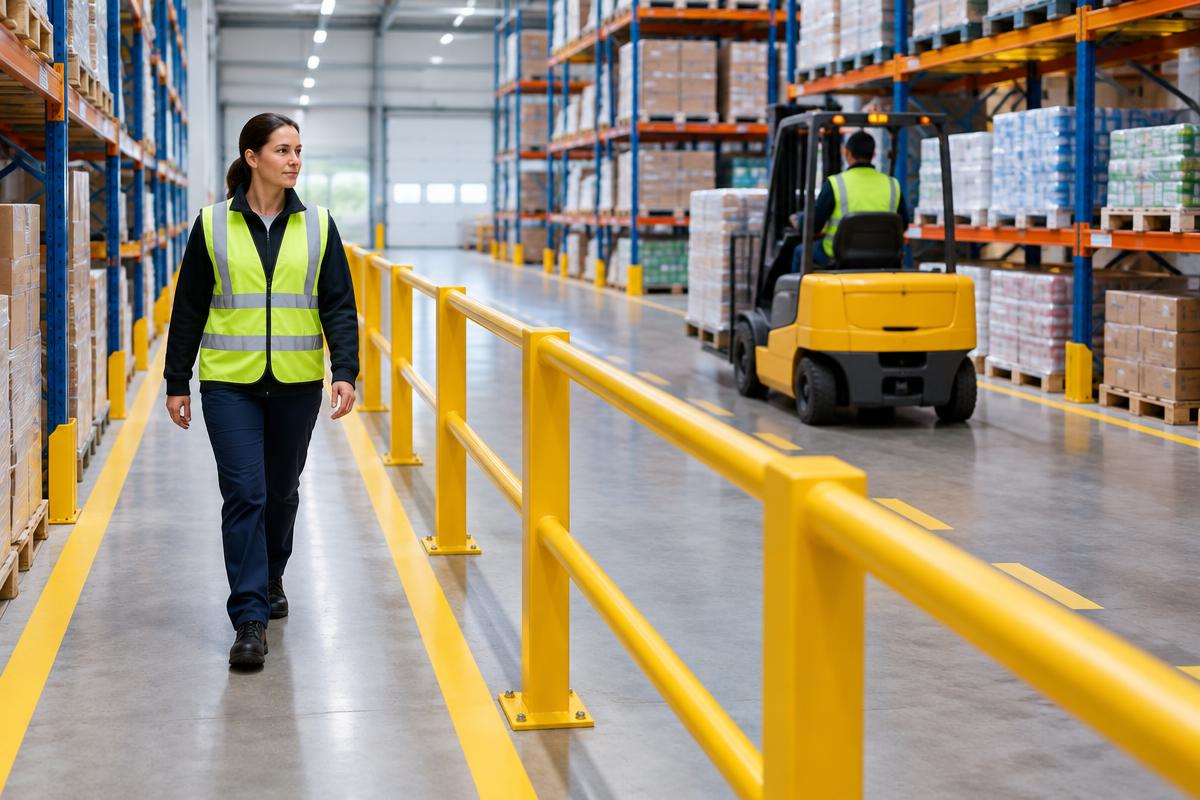
Design separation before relying on visibility
Where practicable, separate pedestrian routes from vehicle routes using a layout and suitable barriers designed for the site. Keep designated aisles clear and make routes easy to understand. High-visibility clothing can support the traffic plan, but it is not a replacement for separation, clear sightlines and safe operating procedures.
Walk the pinch points
Review doorways, blind corners, loading areas and crossing points where pedestrians and vehicles meet. Consider how stored goods, open doors and temporary work affect visibility. A route that looks fine on a drawing can become unsafe when a pallet blocks the view. Check the layout during real operations, not only when the warehouse is quiet.
Make the plan shared knowledge
Explain the traffic plan to operators, pedestrians, visitors and temporary workers. Pedestrians should use designated routes and should not assume an operator has seen them. Operators need a clear view along their travel path and must follow the site’s safe procedures around people. Never treat eye contact alone as permission to cross a moving vehicle’s path.
Recheck when the warehouse changes
New racking, seasonal stock, contractors and changed loading patterns can alter how people and vehicles move. Review routes when those conditions change. Ask workers where they encounter blocked paths or confusing crossings, then address the layout or work practice. A useful traffic plan is one people can follow during the busiest part of the shift.